"I like to think of The Mint as 'the museum that could,'" Mint archivist Ellen Show told CLTure. She said it while looking at black-and-white photographs of the open farmland that once surrounded the building in Eastover. Today, Thursday, October 22, is 90 years to the day since the museum first opened to the public at that spot, according to CLTure's history of the institution.
Most people on Randolph Road know the outline. The building was a U.S. Mint, it once stood uptown, and somebody moved it. Private hands shaped the place at each step: a citizens' group bought the building, a developer gave the land, and a garden club paid for the grounds, while the exhibition opening this week for the 90th anniversary comes from one Charlotte family's gift. The Mint at 2730 Randolph Road has always depended on what local people were willing to give it, and the anniversary programming follows that same pattern.
A building bought as rubble
The Charlotte Mint started out as federal property, and it was an important one. Mecklenburg County's Historic Landmarks page calls it the first branch of the U.S. Mint outside Philadelphia. The branch was built at 403 West Trade Street because gold was discovered in nearby Cabarrus County in 1799. William Strickland designed it. He was the Philadelphia architect behind the first U.S. Mint, and the Treasury Department paid him $150 for the Charlotte plans.
The building burned in 1844 and was rebuilt the next year as a one-story structure. After the Civil War it reopened as a U.S. Assay Office, which ran until 1913. Over the next two decades it served as a federal courthouse, a Red Cross headquarters, and a meeting place for prohibition and women's rights advocates. In 1931 the county decided to expand the Main Post Office next door, and the Mint was in the way. Charlotte architect Martin Evans Boyer Jr. drew up several designs that would have kept the building in place. When those failed, the Treasury Department offered to let it be moved, as long as the move cost the government nothing.
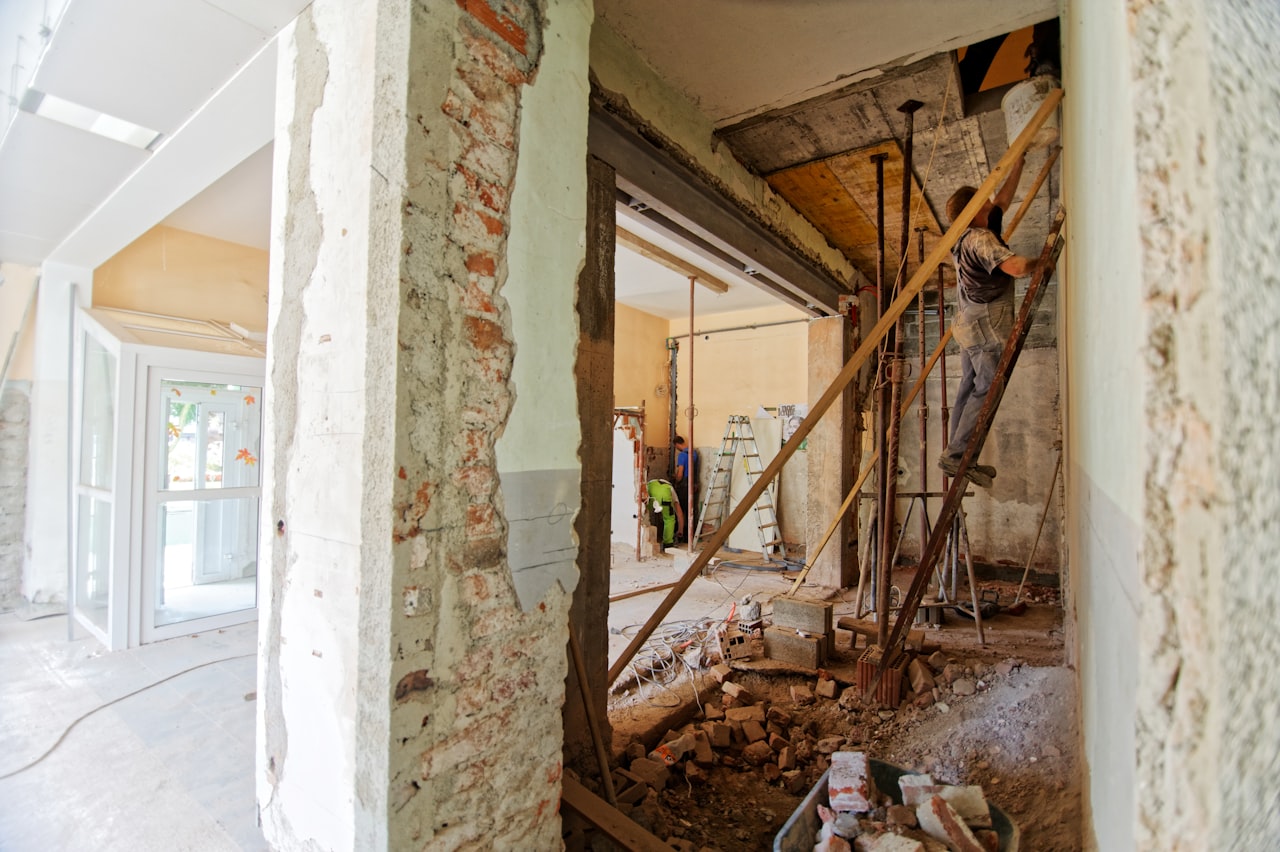
That condition is why the museum exists. In 1933, preservationists led by Mary Myers Dwelle bought the building for $950. CLTure's account says the demolition went ahead in February of that year, so what the group actually paid for was the rubble. Workers paid through federal relief programs then rebuilt the structure "in exact detail," using sketches from Boyer that marked each stone and beam.
The Myers Park connection
Dwelle's surname may not mean much to people today. Her maiden name explains a lot. CLTure identifies her as the daughter of John Springs Myers, who turned his farmland into the Myers Park suburb in the early 1900s, and the granddaughter of Colonel William Myers. He gave the eight hilltop acres that became Biddle University, now Johnson C. Smith University. CLTure describes her as coming from "a family that made a habit out of turning rural property into Charlotte history."
So the family that laid out Myers Park also, a generation later, made sure the city got an art museum, and put it right next door. The Mint's own history credits Dwelle with leading the citizens' effort to save the building and found the museum. In the CLTure piece, Show calls her "the driving force behind the founding of the Mint." She also notes that a 1973 history of the museum called Dwelle the "Godmother of the Mint."
The money for the move was federal, from the North Carolina Civil Works Administration, the Federal Emergency Relief Administration and the Works Progress Administration. The idea came from Leila Mechlin, an art critic at the Washington Star. Dwelle had invited her to speak to the Charlotte Women's Club, and Mechlin suggested that an art museum might qualify for New Deal relief funding.
Where Eastover's piece came from
The site was donated too. Developer E.C. Griffith gave the land. CLTure puts it at four acres known as "Watkin's Bottoms." The gift kept going after opening day. In 1955 the Charlotte Garden Club commissioned landscape architect Stuart Ortloff to formally landscape the grounds, and later expansions added space to the building.
Put in order, the sequence looks like this:
- 1931: The county plans a post office expansion that threatens the Mint on West Trade Street.
- 1933: Dwelle's group buys the building for $950.
- 1934 to 1936: The building is dismantled, moved and rebuilt on Griffith's donated land in Eastover.
- October 22, 1936: The museum opens to the public, per CLTure.
- 1955: The Charlotte Garden Club pays for the formal landscaping.
The Mint and the North Carolina Department of Natural and Cultural Resources both describe the result as the state's first art museum. CLTure points out that the opening came after three years of construction and financial setbacks during the Great Depression.
The 90th-year show is a gift, too
The big new exhibition this fall fits the same pattern. Brilliant by Design: The Handbags of Judith Leiber runs October 24, 2026, through July 3, 2027, at Randolph. The Mint says it was "inspired by a recent gift to the museum." The exhibition page credits the pieces to the family of Vicki and Jim Mills. They include a beckoning cat minaudière from around 1994, a green frog from around 1986, and a pink rotary phone from around 2013. A collection guide from the Mint's archive identifies Vicki Mills as a Judith Leiber collector.
The show includes more than 100 handbags and accessories, displayed alongside fashions from the Mint's own collection. One purse is made from an actual shell, and one box is modeled on a Tiffany mosaic ceiling. Leiber was born Judith Petö in Budapest in 1921. She was the only female apprentice in Hungary's handbag guild and went on to become a master craftswoman. She came to the United States in 1947 and founded her own company in 1963.
The Mint Museum Auxiliary is the presenting sponsor, with support from Wells Fargo and HB Wealth. Bridget Kerr, the Mint's Fashion Fellow, curated the show. It comes with a book of the same name from Yale University Press.
Anniversary weekend, in order
The Mint has set up the weekend as a run of events over three days, all at Randolph:
- Friday, October 23, 11 a.m. to 2 p.m.: Members-only preview of the Leiber exhibition.
- Friday, October 23, 2 to 3:30 p.m.: A free conversation with curator Bridget Kerr.
- Saturday, October 24: The exhibition opens to the public with general admission.
- Sunday, October 25, 1 to 5 p.m.: Party in the Park, a free celebration of the 90th anniversary. It has live music on the terrace, food trucks, birthday-hat making, custom bag charms, a scavenger safari through the Leiber galleries, and demonstrations by local leatherwork artists.
According to the Mint's visitor page, as of August 2026, Randolph is closed Mondays and open until 9 p.m. on Wednesdays. Sunday hours are 1 to 5 p.m., the same window as the party. Adult admission is $15. Visitors 18 and younger and members get in free, and admission is free for everyone on Wednesdays from 5 to 9 p.m. Parking is in the free lot directly in front of the building. If you skip the weekend crowd, the next free evening is Wednesday, October 28. Two other exhibitions are on at Randolph too. Interventions: Weaving Joy, Woven Resistance runs through January 17, 2027, and Portals To The Past: British Ceramics 1675-1825 is ongoing.
The rest of the season, close to Randolph
Within a short drive of the museum, a few nearby openings and garden dates fill out the rest of the fall:
- Orrman's Cheese Shop has moved from its stall at the Market at 7th Street to a storefront at 2901 Selwyn Ave. The Charlotte Observer's CharlotteFive reported a grand opening on May 4.
- Omakase by Prime Fish at 2907 Providence Rd. reopened after a short renovation. CharlotteFive reported that the updated counter has custom oak millwork, a redesigned entrance and shoji-inspired details.
- Wing Haven on Ridgewood Avenue is taking holiday greenery preorders through November 9, with pickup at the nursery at 248 Ridgewood Ave. on December 3. On Saturday, December 5, from 10 a.m. to noon, its Holiday Trees for Wildlife family event at the SEED Wildlife & Children's Garden, 260 Ridgewood Ave., includes edible ornaments for wildlife, crafts and stories. The free Historic Holiday Open House runs Sunday, December 6, from 1 to 4 p.m. at 248 and 348 Ridgewood Ave. Wing Haven asks visitors to register in advance.
Wing Haven fits the theme. It's another Myers Park institution where a private property became something the public can visit.
Questions about Eastover, Myers Park, or the history behind the house you're thinking about? Lana Laws and the team at The Laws Collective are happy to share what we know. Start the conversation.