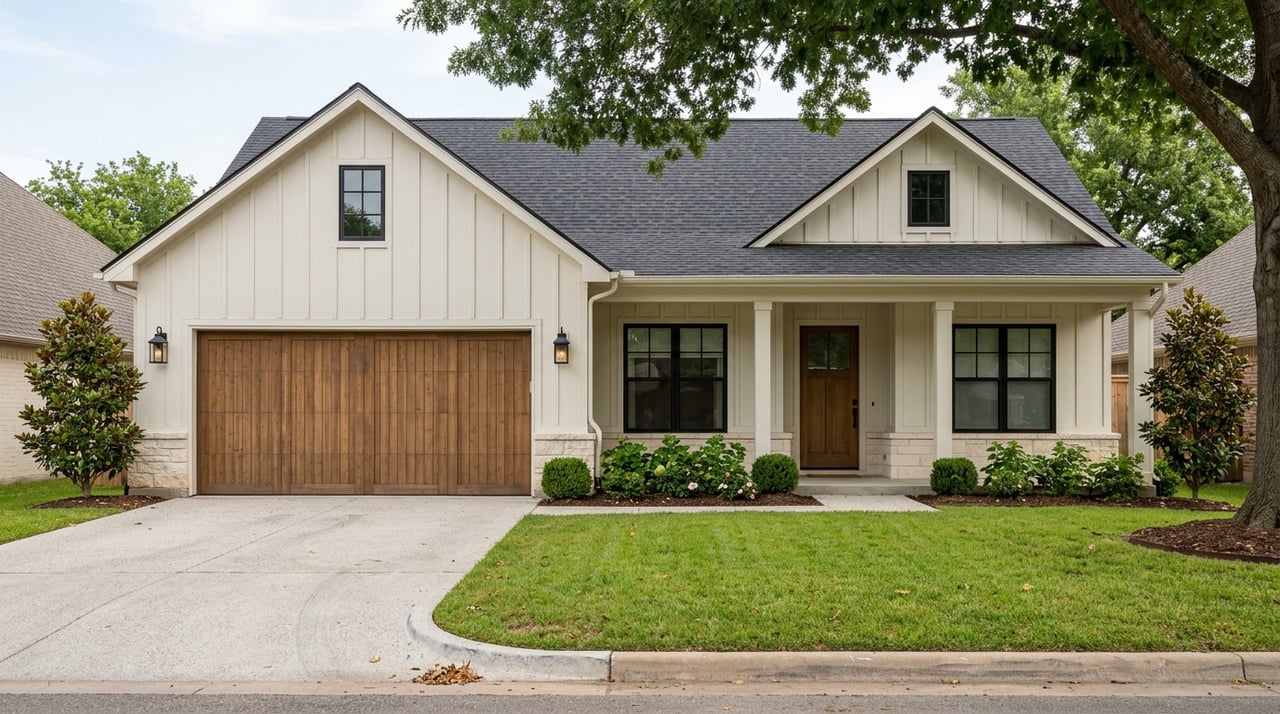
If you are planning your next move in Charlotte, one question tends to shape everything else: what kind of upgrade actually matters most to you? In Charlotte’s core neighborhoods, a move-up purchase is rarely just about getting more house. It is usually about choosing the right mix of location, character, convenience, and lifestyle. This guide will help you compare Charlotte’s key neighborhoods through that lens so you can narrow your shortlist with more confidence. Let’s dive in.
What move-up buyers are really comparing
Charlotte’s core neighborhoods do not sit in one neat pricing bucket. Based on March 2026 median sale snapshots, the range in this group runs from about $420,000 in Wesley Heights to $1,625,000 in Ballantyne Country Club, with many inner-ring options clustering in the mid-$500,000s to low-$800,000s.
That matters because your move-up decision is usually not just about budget. You are often weighing one premium against another, such as historic architecture, larger lots, a more walkable setting, newer master-planned amenities, or a central location that simplifies daily life.
Quick look at Charlotte core neighborhoods
| Neighborhood | Median Sale Price | Best Known For |
|---|---|---|
| Wesley Heights | $420,000 | Historic west-side character with strong bike and transit access |
| Cotswold | $554,053 | Mid-century housing and central convenience |
| Dilworth | $577,500 | Historic charm and close-in access |
| South End | $661,000 | Urban energy, walkability, and Blue Line access |
| SouthPark | $674,500 | Retail access, mixed-use convenience, broader housing mix |
| Eastover | $744,000 | Stately homes and close-in prestige |
| Plaza Midwood | $810,000 | Varied architecture and inner-ring lifestyle |
| Myers Park | $1,487,500 | Classic prestige and estate-like streetscapes |
| Ballantyne Country Club | $1,625,000 | High-end suburban living within a master-planned district |
These figures are best read as relative market signals, not exact pricing for every home you will see. Within each area, condition, lot size, renovation level, and housing type can still shift value significantly.
Best neighborhoods for walkability
South End for car-light living
If your next move is about simplifying your commute and staying close to restaurants, retail, and activity, South End stands out. Its median sale price is $661,000, and its 86 Walk Score plus Blue Line access make it the clearest fit in this group for buyers who want a largely car-light routine.
South End also has a very distinct feel. Repurposed industrial buildings, the Rail Trail, boutiques, breweries, and arts-and-entertainment uses shape a more urban experience than most other Charlotte neighborhoods in this comparison.
Plaza Midwood for character and access
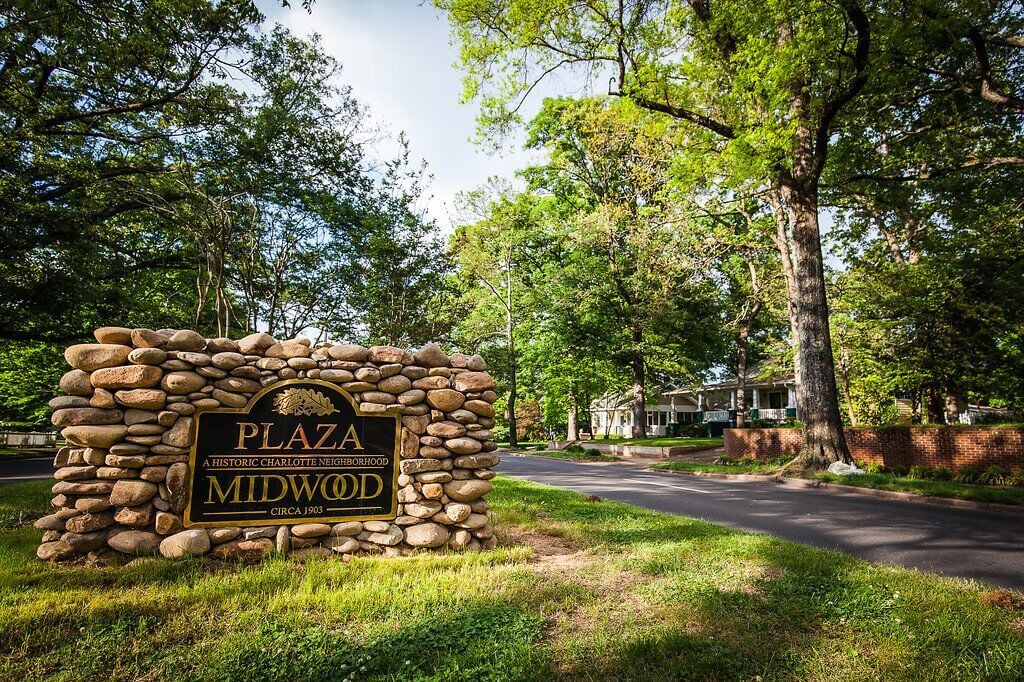
Plaza Midwood offers a different version of walkable living. The neighborhood began as a streetcar suburb in the early 1900s, and the City of Charlotte notes that its historic district includes the city’s most varied architecture.
Today, the median sale price is $810,000, with homes taking about 58 days to sell. Its walk, transit, and bike scores of 56, 39, and 50 suggest a strong inner-ring lifestyle, though not a fully car-free one for most households.
Best neighborhoods for historic prestige
Myers Park for classic luxury
For many move-up buyers, Myers Park represents the traditional Charlotte upgrade. Its planning roots date to John Nolen’s 1911 street plan, and the neighborhood is known for Colonial Revival and Tudor Revival homes in a polished, estate-like setting.
The current median sale price is $1,487,500, which places it firmly in Charlotte’s luxury category. Even with its more residential and gracious feel, the area remains relatively close to Uptown and is described as pedestrian-friendly with several bus routes.
Eastover for stately homes near Uptown
Eastover also appeals to buyers looking for a more elevated historic setting. Developed in phases beginning in 1927, it carries a strong legacy of stately homes, especially Colonial Revival architecture, with later additions that expanded the style mix.
Eastover’s median sale price is $744,000, and the area sits about 2 miles southeast of downtown. In practical terms, it offers a close-in location with a more established, residential streetscape than some of Charlotte’s busier mixed-use districts.
Dilworth for early Charlotte charm
Dilworth deserves a close look if you want historic character but are not necessarily targeting the highest luxury price point in this group. Founded in the 1890s as Charlotte’s first suburb, it is known for curving roads, dramatic architecture, and a direct historic link to the city’s first electric streetcar.
Its current median sale price is $577,500, with a median 144 days on market. For buyers who want older Charlotte character and central access near Uptown, Dilworth continues to be a strong contender.
Best neighborhoods for central convenience
Cotswold for an easy everyday routine
Cotswold often appeals to move-up buyers who want a central location without the denser urban feel of South End or Plaza Midwood. Cotswold Village opened in 1963 and remains the neighborhood’s everyday retail anchor, while the surrounding residential fabric is often associated with 1950s-to-1970s ranch-era homes on tree-lined streets.
With a median sale price of about $554,053, Cotswold sits below SouthPark and most of the classic prestige neighborhoods in this comparison. That can make it an appealing middle ground if your priorities include convenience, established streets, and a more residential rhythm.
SouthPark for mixed-use access
SouthPark functions more like a district than a single neighborhood. It is widely recognized as a central retail destination that is continuing to evolve into a more mixed-use center.
The current median sale price is $674,500, and homes are selling in about 49 days. For move-up buyers, SouthPark tends to offer central convenience, shopping and dining access, and a wider range of housing options than some of Charlotte’s tighter historic-grid neighborhoods.
Best neighborhood for master-planned living
Ballantyne for amenities and a wider price ladder
If you want a suburban routine with a more packaged amenity ecosystem, Ballantyne stands apart. The district includes office space, The Bowl, parks, TD Amp, a shuttle, CATS Route 43, and planned LYNX Blue Line stops, making it the most clearly master-planned option in this group.
Ballantyne is also segmented by submarket. Ballantyne West is at $435,000, Ballantyne East is $652,500, and Ballantyne Country Club is $1,625,000.
That broad spread gives move-up buyers more room to choose a price point within the same larger district. At the same time, the lower- and mid-tier Ballantyne areas remain more drive-oriented, which is important if commute style and walkability are high on your list.
Best value among close-in historic options
Wesley Heights for west-side character
Wesley Heights is one of the most interesting options for buyers who want historic character without stretching into east-side prestige pricing. It was developed in the 1920s and is recognized as Charlotte’s first local historic district on the west side, with bungalow-style homes and tree-canopied streets.
Its median sale price is $420,000, making it the most affordability-oriented historic close-in option in this comparison. The neighborhood also shows a strong transportation profile for Charlotte, with walk, transit, and bike scores of 49, 52, and 72.
For a move-up buyer who values character, access, and a more urban edge, Wesley Heights can offer a compelling balance.
How to narrow your shortlist
When you compare these neighborhoods side by side, a few patterns become clear. If walkability and urban energy lead your list, South End and Plaza Midwood rise quickly. If you are drawn to classic prestige and larger-lot historic housing, Myers Park and Eastover deserve strong consideration.
If your goal is central convenience with a more residential scale, Cotswold and SouthPark offer practical everyday access with different housing feels. If you want a more planned suburban environment with amenities built into the district, Ballantyne is the clear standout.
And if you want west-side historic charm with stronger bike and transit utility at a lower median price, Wesley Heights is hard to ignore. Dilworth sits in its own useful lane as well, especially for buyers looking for historic Charlotte character and close-in access without jumping straight to the top luxury tier.
The right move-up choice is personal
The best neighborhood for your next move is not always the one with the biggest house or the highest price tag. It is the one that fits the way you want to live, commute, entertain, and grow over the next several years.
That is why neighborhood-level guidance matters so much in Charlotte. Two areas can sit fairly close on a map and still offer very different tradeoffs in architecture, street pattern, convenience, and day-to-day feel.
If you want help comparing specific homes or narrowing your options across Charlotte’s core neighborhoods, Lana Laws can help you evaluate the tradeoffs and move forward with clarity.
FAQs
Which Charlotte neighborhood is best for walkability for move-up buyers?
- South End is the strongest option in this group for walkability and car-light living, with an 86 Walk Score and Blue Line access.
Which Charlotte neighborhood offers the most historic character for move-up buyers?
- Plaza Midwood, Dilworth, Myers Park, Eastover, and Wesley Heights all offer historic character, but each does it differently through architecture, lot pattern, and price point.
Which Charlotte neighborhood is most affordable for close-in move-up buyers?
- Wesley Heights has the lowest median sale price in this comparison at $420,000, while still offering historic character and strong bike and transit access.
Which Charlotte neighborhood is best for luxury move-up buyers?
- Myers Park and Ballantyne Country Club sit at the top end of this group by median sale price, with Myers Park known for classic prestige and Ballantyne Country Club tied to a master-planned suburban setting.
Which Charlotte neighborhood is best for central convenience without an urban feel?
- Cotswold and SouthPark are often strong fits for buyers who want central access and everyday convenience in a more residential or mixed-use setting.
How should move-up buyers compare Charlotte neighborhoods?
- Start by ranking what matters most to you, such as walkability, architecture, lot size, commute style, or newer amenities, then compare neighborhoods based on those priorities rather than price alone.