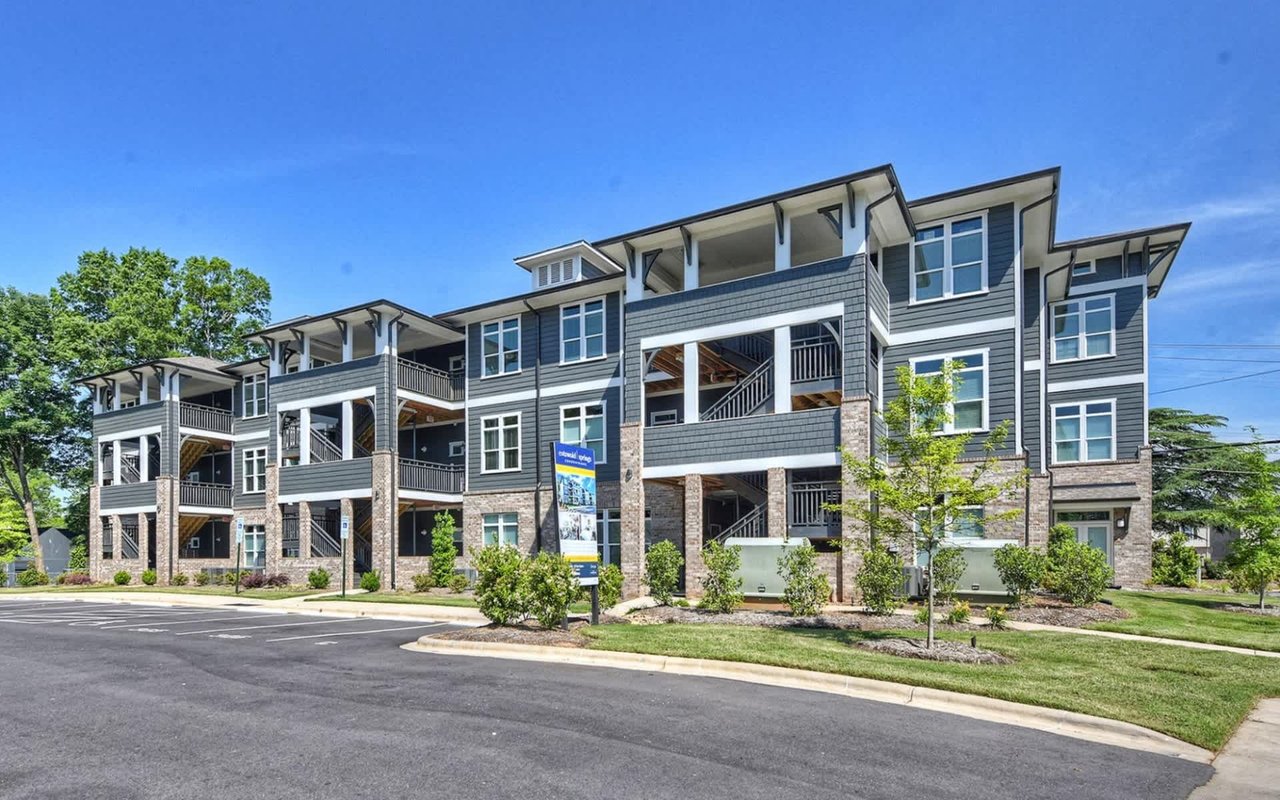
Charlotte infill is not just a buzzword. It is one of the clearest ways growth is showing up across the city, especially in core neighborhoods and inner-ring areas where available land is limited and demand remains steady. If you are evaluating a small site, planning a townhome or stacked-unit project, or simply trying to understand how a lot moves from idea to delivery, it helps to know how Charlotte’s process actually works. This guide walks you through the local rules, approval path, and launch considerations that shape infill development in Charlotte. Let’s dive in.
Why Charlotte infill matters now
Charlotte is still growing at a meaningful pace. Census QuickFacts estimates the city’s population at 964,784 as of July 1, 2025, which is up 10.3% from the April 1, 2020 base.
That growth matters because it keeps pressure on urban and close-in housing supply. The same Census data shows a median gross rent of $1,612, a median owner-occupied home value of $385,700, and a 51.0% owner-occupied rate. Together, those figures help explain why smaller attached homes and other missing-middle formats continue to draw attention on infill sites.
Charlotte’s broader growth framework also supports this conversation. The city’s planning direction centers on the Charlotte Future 2040 Comprehensive Plan, the Policy Map, and Community Area Plans, which are intended to guide where and how development happens while aligning with infrastructure and existing neighborhood context.
Start with the lot, not the concept
One of the most important infill lessons in Charlotte is simple: the lot rules come first. Before you think about branding, floor plans, or pricing, you need to understand what the site can support under the Unified Development Ordinance, or UDO.
Charlotte’s UDO became effective on June 1, 2023. City materials also note that the code does not use the term “townhome” as a formal land-use category. Instead, projects are reviewed through dwelling-type definitions such as single-family, duplex, triplex, quadraplex, multi-family attached, and multi-family stacked.
That distinction matters because a project may be marketed one way while being processed under a different building form in the city’s approval system. In practice, many infill attached projects and smaller stacked-unit communities are evaluated under those formal UDO definitions.
Core lot standards to check early
Early due diligence should focus on the rules that can change your project quickly. In Charlotte, several standards can shape whether a site is viable and how it needs to be structured.
Key items to confirm early include:
- Whether the lot abuts a public street
- Whether the proposal involves one principal structure or multiple principal buildings
- Whether frontage, access, and site layout fit the applicable district rules
- Whether drainage and tree protection requirements will affect buildable area
- Whether subdivision or plat work is needed before permits
The UDO states that every lot must abut a public street. It also prohibits new flag lots. For single-family, duplex, triplex, and quadraplex sites, the code generally limits development to one principal structure per lot unless the project qualifies as a multi-dwelling development or a cottage court in a Neighborhood 1 district.
Know the zoning districts that shape infill
For many close-in Charlotte sites, Neighborhood 1 and Neighborhood 2 districts are the key code families to understand. These districts often determine which housing types are possible and whether additional conditions apply.
Neighborhood 2 districts allow lower-intensity residential forms such as single-family, duplex, triplex, and quadraplex. Neighborhood 1 districts can be more limited, and quadraplex approvals there are tightly conditioned.
In some N1 situations, affordability requirements become part of the equation. For example, a quadraplex on an arterial outside N1-F generally must include one affordable unit at 80% of area median income for 15 years.
When incentives can change the math
Charlotte’s affordable housing incentives can materially affect what is possible on certain sites. In some eligible areas, the city allows standards up to two intensities above the existing zone without rezoning.
That can be meaningful for land planning, but there is a tradeoff. Half of the extra homes must be affordable at 80% AMI for at least 15 years. The city also has a voluntary mixed-income program that can allow more triplexes on some 2-acre-plus N1-A and N1-B sites if half of the extra homes are affordable.
For owners and investors, this means the highest-value path is not always the most obvious one. Sometimes the strongest strategy is a by-right or incentive-supported approach that matches the lot, the district, and the project timeline more cleanly than a more aggressive rezoning effort.
Understand multi-dwelling development
In Charlotte, project structure matters almost as much as zoning. The city defines a multi-dwelling development as two or more principal residential buildings under single ownership with unified design, open space, and service areas.
That definition is important because many small infill clusters do not operate like a single-house lot, even if the site feels compact. If your concept involves multiple residential buildings or a more coordinated attached or stacked format, the approval path may follow multi-dwelling development standards rather than a simpler individual lot review.
This is one reason early planning is so valuable. The right entitlement strategy often depends on whether the city sees the project as a single lot with one principal building, a sublot configuration, or a unified multi-building development.
Due diligence that protects your timeline
Even well-located infill sites can run into friction if early diligence is too narrow. Charlotte’s Development Center notes that all development, including individual residential lot projects, must comply with drainage and urban forestry requirements.
The city also now reviews residential projects concurrently with Mecklenburg County LUESA plan reviews and building permits. That can improve coordination, but it also means your team needs a complete and realistic submission package from the start.
Charlotte due diligence checklist
Before moving toward permits or marketing, it is smart to confirm:
- Zoning district and permitted dwelling types
- Whether rezoning is required
- Recorded plat status
- Street frontage and access conditions
- Drainage constraints
- Tree protection impacts
- Whether subdivision, sublots, or final plat recordation will be needed
- Whether site disturbance will exceed one acre
Charlotte also states that preliminary subdivision plans should be prepared by a registered landscape architect, engineer, or land surveyor. On infill sites, that professional input can help clarify feasibility long before construction pricing and launch strategy are locked in.
Rezoning versus by-right path
A major early question is whether your requested use fits the current zoning district. If it does not, Charlotte requires rezoning, and a pre-submittal meeting is required before filing.
The city’s rezoning portal then creates a visible public record trail. That trail includes the public hearing, work session, council decision, staff analysis, and site plan revisions.
If the use does fit, the path may be more direct, though not necessarily simple. Charlotte’s current system still requires careful coordination among local zoning review, land development review, and Mecklenburg County building permit review.
Real examples from Charlotte
Public cases help show how these rules work in practice. At 2510 Toddville Road, Habitat for Humanity built Charlotte’s first duplex by right under the UDO, using the density bonus to move from a lot that could previously support one market-rate home to two affordable homes.
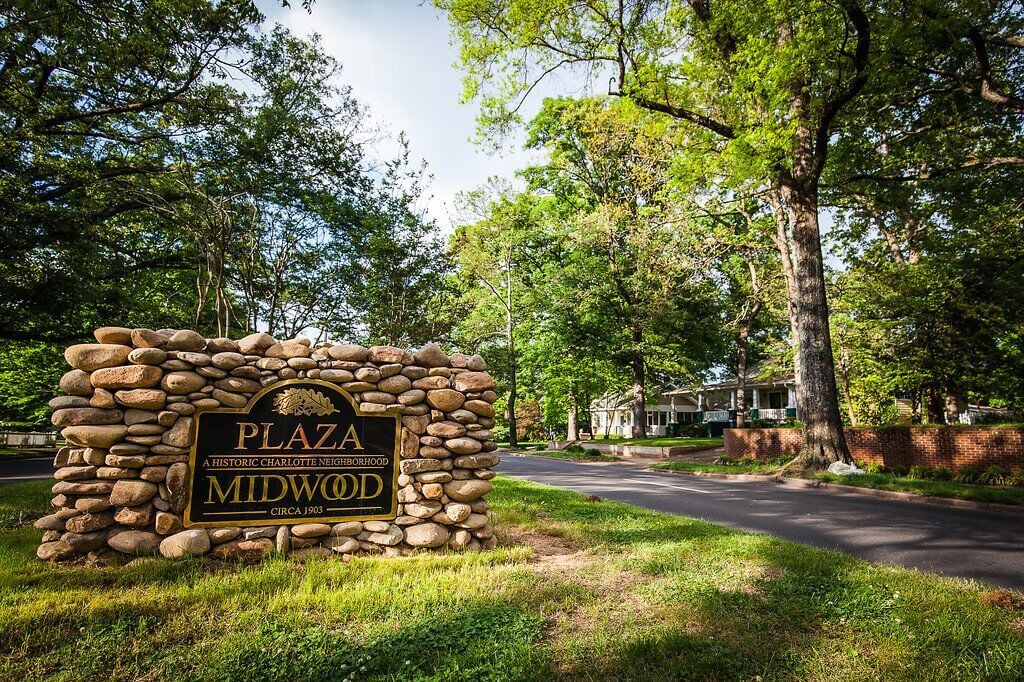
Other projects moved through rezoning. At 5042 The Plaza, a rezoning from N1-B to N2-A(CD) sought up to 43 multi-family attached units. At 8114 Nations Ford Road, a rezoning from R-9(CD) to N2-A(CD) approved up to 82 attached units.
These examples show that Charlotte infill can take very different forms depending on lot size, zoning, and ownership goals. Some projects fit within current rules, while others need a formal zoning change to proceed.
The approval path from lot to permit
Once a site strategy is clear, the next step is understanding the submittal path. Charlotte’s process varies based on whether you are working with an existing infill lot, a duplex or triplex configuration, or an approved multi-dwelling development.
For example, the city’s submittal guide states that:
- Existing infill lots for single-family dwellings require the lot to be on a recorded plat, plus an LDIRL application and county building permit review
- Duplex, triplex, and quadraplex projects on existing infill lots require LDIRL, and a city plat if units are on sublots
- Approved multi-dwelling developments require LDCP approval, a CLTZR application, county building permit review, and final plat recordation
Charlotte also makes clear that LDIRL is separate from the Mecklenburg County building permit. Mecklenburg County Code Enforcement states that residential permits are required for new construction of one- and two-family dwellings and townhomes, along with many alterations.
Review timing and construction start
For residential lots, Charlotte says Storm Water, Urban Forestry, and Zoning review run concurrently in Accela. The city notes a 3-business-day gateway and a 7-business-day review cycle for residential projects.
Once city approvals are complete, Charlotte releases the relevant permit holds in Mecklenburg County’s system. Construction can begin after land development, CDOT, and NCDOT approvals are complete. If a project disturbs more than one acre, a pre-construction meeting request is required.
The final milestone is occupancy. A certificate of occupancy is issued only after all permits are finaled and all holds are released.
Infill opportunities beyond vacant lots
In Charlotte, infill is not limited to a leftover residential parcel between two existing homes. Redevelopment of underused properties is also a meaningful part of the story.
One local example is Hoover Townes, which will bring 39 townhomes to the former Economy Inn site in the West Sugar Creek Corridor of Opportunity. The city frames the project as an affordable homeownership redevelopment, and it illustrates how obsolete motel or commercial sites can become residential opportunities.
Corridors of Opportunity are worth watching for this reason. Charlotte says the program focuses on six underinvested corridors and has attracted more than $259 million in combined city, corporate, federal, and partner investment.
Launch strategy matters after approvals
Getting approved is only part of the work. A successful Charlotte infill launch also depends on how the product is positioned for buyers and how clearly the story connects to the site.
Charlotte’s planning framework emphasizes neighborhood context, infrastructure alignment, and pedestrian-friendly growth in corridors and transit-oriented areas. That makes launch themes like walkability, access, site design, public realm improvements, and everyday usability especially important.
For attached and stacked projects, language should also match the real building form. In Charlotte’s public records, condo-style projects are often described as multi-family stacked or multi-family attached rather than by ownership label alone.
What strong project marketing needs
For a smaller infill project, thoughtful presentation can make a meaningful difference. Buyers respond to clear design logic, realistic floor plan positioning, strong photography, and a launch strategy that explains why the site and product make sense together.
That is especially true in Charlotte’s core neighborhoods, where buyers often compare architecture, block context, commute patterns, and nearby retail or greenway access at the same time they compare price. A polished rollout should make those value points easy to understand without overcomplicating the message.
For developers and landowners, this is where strong local advisory support matters. Pricing matrices, launch sequencing, and buyer-facing presentation should all reflect the actual entitlement path and the product type the site can support.
Why local guidance matters in Charlotte infill
Charlotte infill can move quickly when the lot, zoning, and product type are aligned. It can also get expensive when assumptions are made too early or when a site is marketed around a concept that the code does not support.
The strongest outcomes usually start with a disciplined first pass on lot rules, zoning, frontage, drainage, trees, plat status, and approval path. From there, the project can be shaped around real constraints and real opportunities, whether the goal is a by-right duplex, a townhouse cluster, a stacked-unit community, or a redevelopment play in an emerging corridor.
If you are evaluating an infill lot, preparing a development launch, or weighing how to position a Charlotte site for sale, working with an advisor who understands both neighborhood demand and project marketing can help you move with more clarity. To start the conversation, connect with Lana Laws.
FAQs
What is infill development in Charlotte?
- In Charlotte, infill development generally refers to new residential development on vacant, underused, or redevelopment sites within already developed areas of the city.
What zoning rules matter most for Charlotte infill lots?
- The most important early checks include the zoning district, permitted dwelling types, public street frontage, principal structure limits, drainage requirements, tree protection rules, and whether a recorded plat or subdivision work is required.
Does Charlotte use the term townhome in the UDO?
- No. Charlotte’s UDO does not use “townhome” as a formal code term and instead relies on dwelling-type definitions such as single-family, duplex, triplex, quadraplex, multi-family attached, and multi-family stacked.
When does a Charlotte infill project need rezoning?
- A Charlotte infill project needs rezoning when the requested use is outside the current zoning district, and the city requires a pre-submittal meeting before a rezoning filing.
What is LDIRL for Charlotte residential lots?
- LDIRL is part of Charlotte’s land development review process for individual residential lot projects and is separate from Mecklenburg County’s building permit review.
How long does Charlotte residential lot review take?
- Charlotte states that residential projects have a 3-business-day gateway and a 7-business-day review cycle for concurrent Storm Water, Urban Forestry, and Zoning review, while Mecklenburg County lists average review goals of seven days for one- and two-family dwellings and twelve days for townhouse projects.
Can affordable housing incentives increase density on Charlotte sites?
- Yes. In some eligible areas, Charlotte allows standards up to two intensities above the existing zone without rezoning, but part of the added housing must meet the city’s affordability requirements.
Are redevelopment sites part of Charlotte infill strategy?
- Yes. Charlotte examples like the former Economy Inn site show that obsolete motel and commercial properties can be repositioned for housing as part of the city’s redevelopment and corridor investment efforts.